NAMING GUIDE
How to Blend Two Names Without Losing Their Identity
A practical method for combining two names into one new form while keeping the result readable, pronounceable, and visibly connected to both originals.
Begin by deciding what must remain recognizable
A strong name blend usually keeps at least one clear clue from each source name. That clue might be a beginning sound, an ending, a syllable, a distinctive letter pattern, or a short fragment people already associate with the original name.
Before cutting letters, write down the versions of both names that matter most. A formal name, common nickname, or familiar pronunciation may offer a better blending point than the longest written form. The goal is not to use every letter; it is to preserve enough identity that the result still feels connected to both people or words.
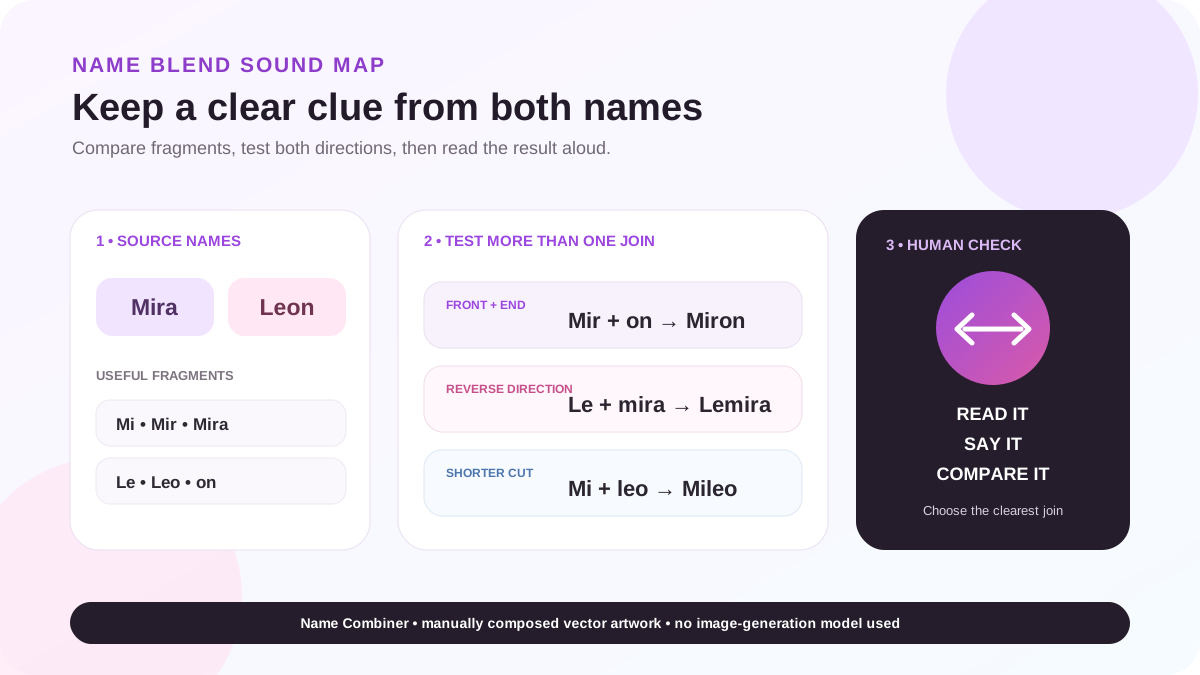
Try the simplest front-and-end join first
One useful starting method is to keep the opening of one name and the ending of the other. This often works because listeners hear a familiar start, then a familiar finish, without needing to decode a complicated construction.
Do not assume the first cut point is the best one. Move the boundary by a letter or a syllable and compare the results. A tiny adjustment can remove a hard consonant collision, repeated sound, or awkward spelling while keeping the same basic idea.
- Keep enough of the opening name to make it recognizable.
- Choose an ending that completes the word naturally when spoken.
- Trim repeated letters when they make the join look accidental.
- Compare the written result and the spoken result separately.
Reverse the direction before judging the idea
Name order changes rhythm. A blend that feels clumsy when Name A leads may become smoother when Name B leads, even if the same fragments are used. Always test both directions before discarding a combination.
This matters especially when one name has a clean opening and the other has a more natural ending. The better order is the one that creates the clearer word, not necessarily the order in which the original names were entered.
Look for shared letters and compatible sounds
Some names connect naturally because they share a vowel, consonant, syllable, or similar sound near the join. When that happens, the overlap can make the new form feel less stitched together.
Treat shared letters as an opportunity, not a requirement. Forcing an overlap simply because the same character appears in both names can create a spelling that looks clever but sounds confusing. The test is whether the transition remains easy to read and pronounce.
- Shared vowel sounds can soften the middle of a blend.
- Repeated consonants may be reduced when one copy reads more naturally.
- A shared syllable can sometimes act as a bridge between both names.
- Written overlap should still match the way you expect people to say the result.
Use syllable balance when both names have strong parts
Letter counting is not the same as balance. A blend can contain an equal number of characters from both names and still sound dominated by one side. Syllables, stress, and recognizable sound fragments often matter more than raw character count.
Compare short forms that preserve one meaningful sound from each name. If one source disappears completely when spoken, try a different cut point or a different order. The strongest result usually feels intentional rather than mathematically equal.
Read the result aloud before you trust the spelling
A blend can look smooth on screen and still be difficult to say. Read each candidate several times at normal speaking speed, then place it in a sentence. Notice where your mouth pauses, whether the stress changes unexpectedly, and whether you naturally pronounce the spelling the way you intended.
Ask another person to read the name without coaching. If they consistently pronounce it differently, the spelling may be sending the wrong signal. A small edit is usually better than expecting everyone else to learn a special pronunciation rule.
- Can someone pronounce it after seeing it once?
- Does the stress fall in a natural place?
- Does any letter sequence invite a second, unintended pronunciation?
- Does the result still sound good when spoken quickly?
Protect the identity of both source names
A blended name does not need to contain equal halves, but both sources should still contribute something meaningful if that connection is the reason for making the blend. The contribution might be visual, phonetic, or structural rather than exactly fifty-fifty.
This is especially important for couple names, family-style blends, baby-name inspiration, and collaborative identities. If one person cannot recognize any part of their name in the result, the blend may have become a completely separate invention rather than a shared form.
Compare several versions instead of polishing one too early
For another set of candidates, compare the same inputs with the independent Namecombiner.com tools. Different approaches may cut the names differently; a repeated suggestion is not proof that it is unique or available.
Make a small shortlist of genuinely different options: one front-and-end blend, one reverse-direction blend, one overlap-based option, and one shorter form. Comparing different structures makes it easier to notice which one actually reads best.
Leave the shortlist for a while, then return to it. Familiarity can make an awkward name start to feel normal simply because you have read it repeatedly. A fresh look often exposes the option that is easiest to understand without explanation.
Use a name combiner for volume, not the final decision
A name-combining tool is useful when there are many possible split points, shared letters, orderings, or length preferences to test. It can produce a wider shortlist quickly and help surface combinations you may not think of manually.
The final judgment should still be human. A generator cannot guarantee correct pronunciation, cultural suitability, legal availability, username availability, or that both people will like the same result. Treat the output as a set of candidates to evaluate, not an automatic winner.
You can use our Couple Name Combiner when the goal is a shared couple name, or the Word Combiner when the project sits closer to words, brands, or concepts.
Final checklist for a natural name blend
The strongest blends are usually clear enough to read without coaching and distinctive enough to feel like a deliberate new form. Before you keep one, check the result in the same situations where people will actually see or say it.
- Both source names contribute a recognizable clue.
- The spelling suggests the pronunciation you intend.
- The middle join does not contain an awkward letter or sound collision.
- The name remains readable in lowercase and on a phone screen.
- Another person can say it without explanation.
- The result does not create an unintended word or meaning you want to avoid.
- If the name will be public or commercial, you have checked the relevant availability and legal issues separately.
Final thoughts
Combining two names is part structure and part judgment. Start with recognizable fragments, test both directions, listen for a smooth transition, and compare several versions before choosing one.
A good blend should not need a long explanation. If people can read it, say it, remember it, and still see a connection to both originals, the combination is doing its job.