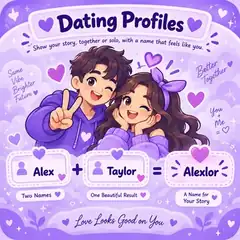
Dating profiles
A couple may want one shared label for a dating memory page, private profile, or playful nickname. A short blend can represent both people without repeating two full names every time.
Turn two names into new combinations by testing letter splits, shared-letter overlaps, source order, and simple vowel/consonant spelling transitions. Use the results for couples, babies, nicknames, usernames, characters, brands, projects, or other creative naming ideas.
Join two names and explore shared-name ideas that feel natural, easy to read, and personal to both people.
Use both parents’ names as a starting point for baby-name possibilities built from familiar sounds and letter patterns.
Combine words into compact new terms for creative projects, product ideas, brands, titles, or memorable phrases.
Find shorter and friendlier forms of a name for everyday use, profiles, contacts, or informal introductions.
Build readable username ideas from names and words for gaming, social profiles, communities, and online accounts.
People combine names for different reasons. Two partners may want a shared nickname, parents may want to explore a child’s name influenced by both families, and writers or creators may need a compact name for a character, project, team, or brand.
You may also see this kind of tool described as a name mixer, name blender, name maker, name combination generator, name fuser, or a way to mash names together. The wording varies, but the useful task is the same: combine two names and compare several plausible results instead of testing every spelling by hand.
A useful combo name should still be easy to read and recognizable enough that both original names can be seen in the final form. The generator can compare spelling patterns, but pronunciation remains something you should judge yourself by saying shortlisted results aloud.
This site separates couple names, baby-name blends, ordinary word combinations, nicknames, and usernames into different tools. Each task has a different goal, even though all of them begin with the same basic idea: reshaping familiar spelling fragments into a new name.
A name combiner is a tool that creates candidate names from parts of two inputs. One result might join the beginning of the first name to the ending of the second; another might use a shared letter, a nearby split point, or the reverse source order.
In practice, a name combiner generator, name mixer generator, or name blender is most useful when it gives you several directions to compare. You can mix names together, merge two names, reverse their order, test shorter fragments, or create a fused name while still keeping the result readable and connected to the originals.
The purpose is not to declare one “correct” combined name. It is to give you a practical set of options that can be judged by pronunciation, spelling, meaning, length, and personal fit. Those judgments are yours; the generator does not verify pronunciation, meaning, origin, or cultural usage.
Name combining is closely related to ordinary word blending: parts of existing words or names are kept while other parts are shortened or joined. This site focuses on traceable spelling operations rather than claiming phonetic or linguistic analysis it does not perform.
Name Combiner brings five focused naming tools together. Read our story to learn why nkdhiman built the site and how the tools are maintained.
A name combiner starts by breaking the names you enter into useful pieces such as beginnings, endings, repeated letters, approximate vowel/consonant boundaries, and several split points. It can then test different ways of joining those pieces so the result still feels connected to the original names.
Good combinations are not judged by spelling alone. Readability and pronunciation matter too. A useful result should be easy to say, visually clear, and balanced enough that one source name does not completely overpower the other.
Choose the Couple Name Combiner for two partners, the Baby Name Combiner for family-name ideas, or combine words for a project. For a personal profile, explore nickname ideas or generate username candidates.
Begin with the names or words you genuinely want to blend. Keep the original spelling first so you can see which letter fragments are available before trying shortened versions.
If the first group of results is not right, adjust the source spelling only when there is a real pronunciation reason to do so. Small changes can improve a blend, but preserving recognizable parts of the original names makes it easier to explain how a generated result was formed.
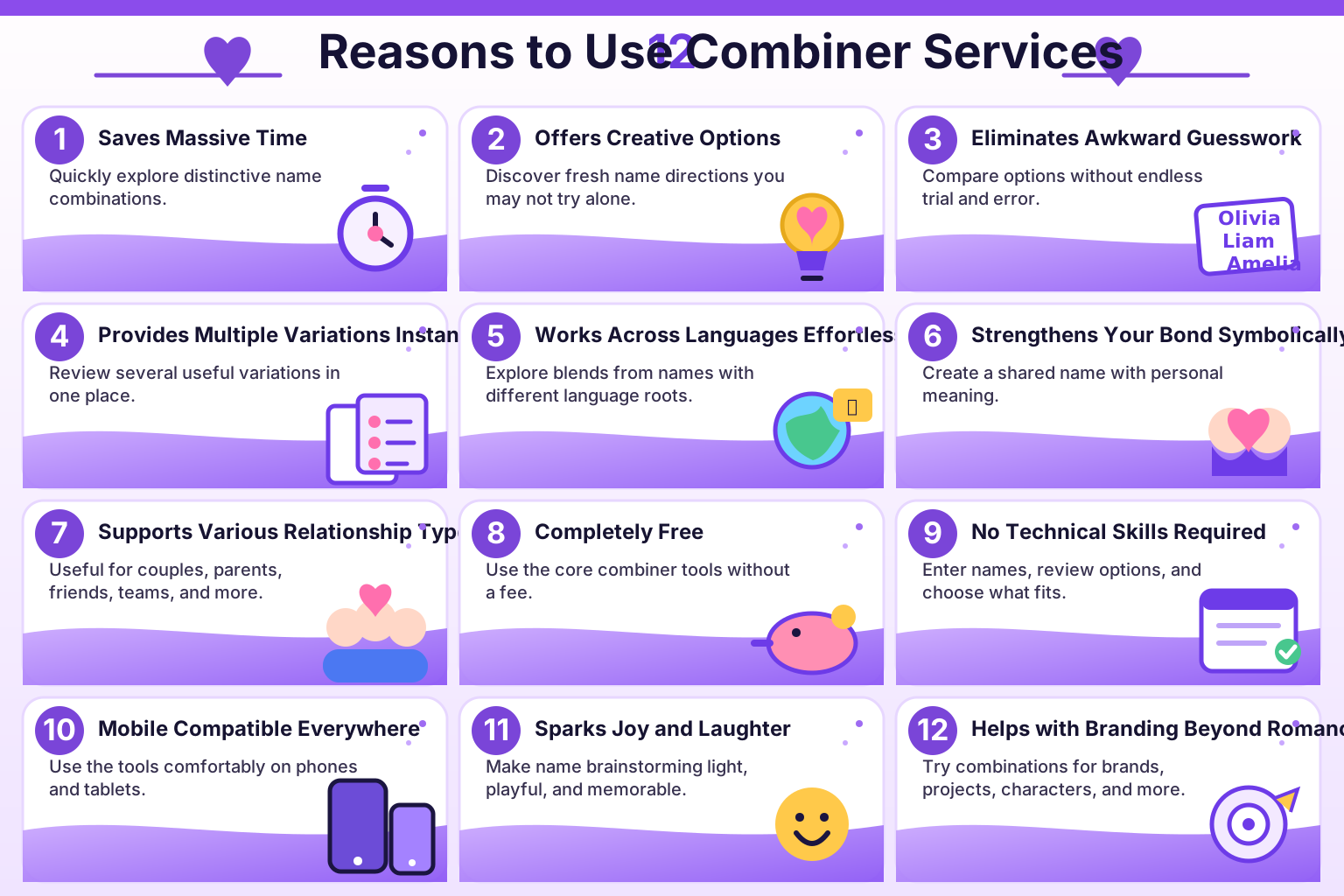
Practical naming situations
Name blending is useful in more places than relationship nicknames. The same basic process can help you explore personal, family, creative, social, and project names — as long as the final choice is checked for the context where it will be used.
A couple may want one shared label for a dating memory page, private profile, or playful nickname. A short blend can represent both people without repeating two full names every time.
Parents sometimes explore names influenced by both families. A combiner can create starting points from two meaningful names, which can then be checked for pronunciation, spelling, origin, and cultural meaning.

Founders can test combinations of surnames, keywords, product ideas, or industry terms. Generated options are useful for brainstorming, but commercial use still requires separate trademark, company-name, domain, and handle checks.
First names, surnames, and familiar short forms can be reshaped into a compact display name. The strongest version keeps enough of the source identity to remain readable instead of becoming an unrelated string.
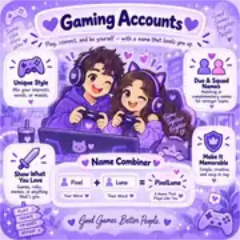
Players can combine a name with a favorite word, team idea, or theme to create gamertag candidates. Check the specific game's character rules and live availability before settling on one.

A creator, couple, or group may need a short identity for a profile or handle. A combined name can provide a useful starting point, but the final spelling should be checked on the platform where it will be used.

A shared name can appear on invitation details, favors, signs, photo labels, or a wedding hashtag. Keeping it short and easy to spell makes it more practical for guests to recognize and reuse.
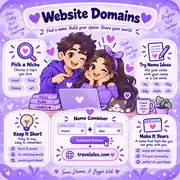
Writers, creators, and small projects can combine a personal name with a topic or merge two keywords into a site-name candidate. Domain availability and trademark questions still need to be checked separately.
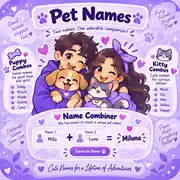
A family can blend favorite names, surnames, places, or small personal references into a pet-name idea. Short, distinct sounds are usually easier to call and easier for a pet to recognize.
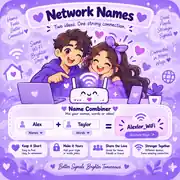
Home Wi-Fi networks, private servers, group chats, clubs, and small teams can use a compact combined label. Avoid putting sensitive personal information into any network name that strangers may be able to see.
A generated result is best treated as a shortlist candidate. Read it aloud, check how it looks in real use, and verify availability, meaning, or legal considerations whenever the name will become a public identity.
Clear answers to common questions about combining names and choosing a result.
A name combiner is a tool for exploring new names from two existing names. This site tests letter breaks, endings, shared-letter joins, source order, and simple spelling transitions so you can compare several possible blends instead of building each one manually.
Start by looking for a readable beginning in one name and ending in the other. You can also try shared letters, reverse the source order, or shorten one input. Read promising results aloud yourself because the generator does not perform a pronunciation test.
A combined name is a new name created from recognizable parts of existing names. Some blends keep obvious pieces from both sources, while others use shorter spelling fragments to make the final result more compact.
A blended name is often described as a portmanteau when parts of two names are joined into one new form. In relationship or fandom contexts, people may also use terms such as couple name or ship name, depending on how the blend is being used.
Enter both names and compare several blend directions rather than relying on one order. A couple name may work better when the shorter name comes first, when a shared letter is used as the join, or when one name contributes the opening and the other the ending.
Add the two names you want to work with, generate the available combinations, and shortlist the results that look natural. Read your favorites aloud, try both name orders, and keep the version that feels easiest to remember and most appropriate for the way you plan to use it.
People use couple-name ideas for shared nicknames, profile names, wedding hashtags, invitation details, private jokes, game or team names, and other creative projects. The same blending method can also be adapted for characters, pets, groups, or project titles.
Yes, although longer inputs usually work best in stages. First identify a useful piece from each name, create smaller blends, and then test whether those pieces can be joined without making the final result too long or difficult to pronounce.
Some spellings join more cleanly than others, especially around shared letters or vowel/consonant boundaries. If a result feels awkward when you read or say it, try a different split point, reverse the order, or shorten one source name before combining again.
Yes, a blended name can be a useful starting point for usernames, creator identities, characters, teams, projects, or brand concepts. If the name will be public or commercial, check availability and any relevant trademark or naming restrictions before relying on it.
No. A combination that feels new to you may already be used by another person, account, business, domain, or project. If uniqueness matters, search the exact spelling in the places where you intend to use it before making the final choice.
Compare your strongest options by pronunciation, spelling, length, meaning, and how clearly they still connect to the source names. Use the name in a realistic sentence or profile, ask someone you trust for feedback, and revisit your shortlist later before deciding.
Combining names manually can be useful when you already have a clear idea in mind. The challenge is that testing many split points, letter overlaps, and name orders quickly becomes repetitive, especially when the source names have very different lengths.
A dedicated combiner makes that exploration more organized. It can present different blending directions in one place so you can compare them faster, reject awkward options, and focus your attention on the results that are easiest to read, say, and remember.
Use the tool to explore possibilities faster, then make the final decision yourself. The final choice is the one that still works for you when you say it, write it, and use it in the situation it was created for.
Start Combining Names