NAMING GUIDE
How to Build a Business Name from Two Strong Words
A practical framework for turning clear business facts into a memorable name shortlist — without depending on random words, copied formulas, or a name generator as the final decision-maker.
Start with the job your business name has to do
A useful business name is not just a word that sounds modern. It has to help the right people recognize, remember, and talk about the business. Before brainstorming, write one short sentence describing what you offer, who you serve, and the result customers care about most.
Then pull out a few naming ingredients from that sentence. One word can represent the service or category, while another can represent the benefit, mood, location, audience, or personality you want the brand to suggest. This gives your ideas direction before you start combining anything.
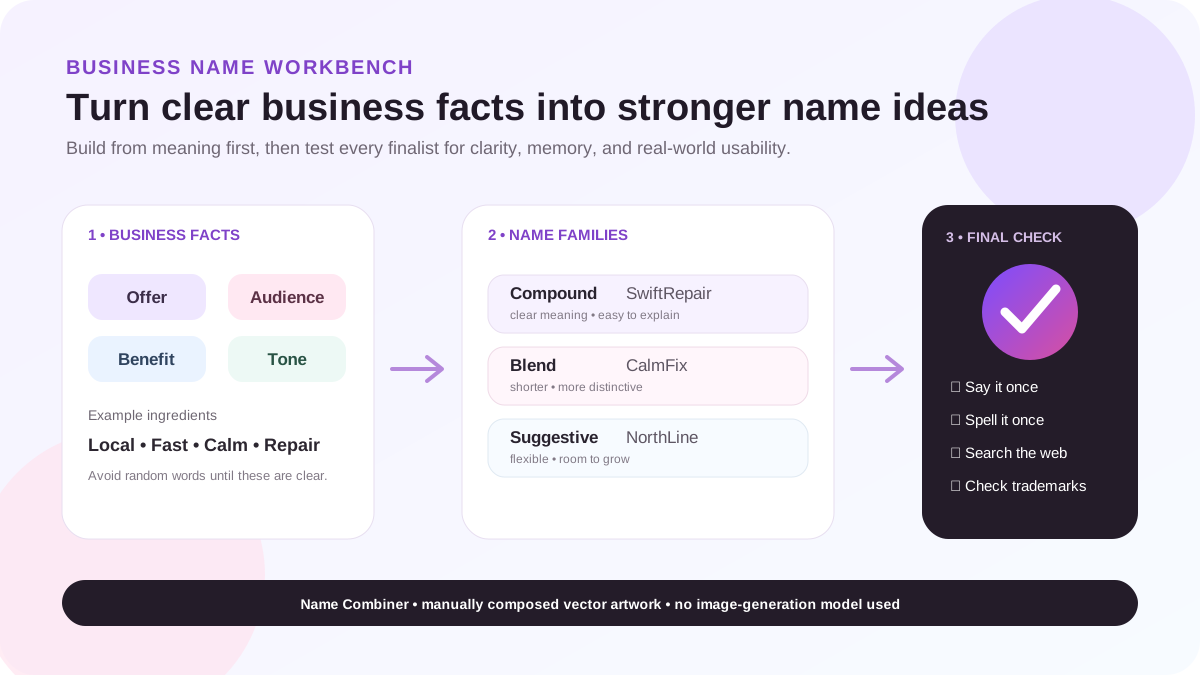
Turn brand facts into useful naming ingredients
Strong naming ingredients usually come from four places: what you sell, who it is for, the benefit you provide, and the tone you want customers to feel. For example, a local repair service might collect ideas around speed, trust, calm, neighborhood identity, reliability, and repair.
Do not worry about making the words sound like a brand yet. At this stage, plain language is valuable because it keeps the meaning honest. A short list of clear source words is more useful than a page full of trendy vocabulary that has no connection to the business.
- Offer: what the customer actually buys or receives.
- Audience: the people, industry, place, or community you serve.
- Benefit: the practical or emotional result customers want.
- Tone: calm, energetic, premium, playful, technical, local, bold, or another deliberate feeling.
Decide what the name should feel like before judging ideas
Two names can describe the same business but create completely different expectations. A soft, reassuring name may work for a home-care service, while a short, energetic name may better suit a sports product. Choose two or three tone words before you compare candidates.
Use those tone words as a filter rather than as decoration. If the business is meant to feel straightforward and dependable, an overly clever spelling can work against that goal. If the brand is deliberately playful, a more surprising blend may be appropriate as long as people can still pronounce it.
Generate name families instead of chasing one perfect idea
For another brainstorming checklist, read Forbes' startup naming tips. If the business identity should preserve two founders' names, try the partner-name combiner and assess the result as a business name rather than a relationship nickname.
The fastest way to get stuck is to fall in love with the first name that feels promising. Build several groups of names instead. Each group should use a different structure so you can compare clarity, distinctiveness, and flexibility rather than comparing tiny variations of the same idea.
- Compound names join two complete ideas, such as a benefit word plus a category word.
- Blended names trim or overlap parts of two words to create a shorter new form.
- Suggestive names point toward a feeling or outcome without describing the service literally.
- Location-led names can create local recognition when the business is genuinely tied to a place.
- Founder or surname-led names can work when personal reputation is central to the business.
A useful shortlist should contain genuinely different directions. If every candidate ends with the same generic word, you have variations, not options.
Use a word combiner as a brainstorming tool, not the final judge
You can compare our word combinations with ideas from Canva's business name generator. Different generators can suggest different directions; shortlist candidates on readability and relevance before checking their availability.
A word-combining tool can quickly expose joins, clipped forms, alternate orderings, and combinations you may not think of manually. That makes it useful during exploration, especially when you already have strong source words.
Treat generated names as raw material. A tool cannot know your trademark situation, expansion plans, customer expectations, or every cultural meaning that might matter. Save promising candidates, then evaluate them using the same business criteria as names you created yourself.
You can use our Word Combiner to test two source words and compare different structures, but the final choice should come from your own checks and business context.
Test spelling, pronunciation, and memory
Say every finalist aloud without explaining it first. Then ask another person to spell the name after hearing it once and pronounce it after seeing it once. Hesitation is useful feedback because it reveals friction you may stop noticing after staring at the shortlist for hours.
Shorter is not automatically better, but unnecessary complexity usually creates cost. If customers have to correct the spelling every time they search, recommend, or email the business, the name is creating work instead of reducing it.
- Can someone say it correctly after one reading?
- Can someone spell it after hearing it once?
- Does it remain clear when written in lowercase?
- Is the name easy to remember a few minutes later?
- Does it still work without a logo or tagline beside it?
Check whether the name is usable in the real world
A memorable idea is not enough if another business already controls the relevant name or mark. Before you invest in a logo, packaging, signs, or a website, search the exact name and close variations in the places that matter for your business.
Check company-name records where appropriate, trademark databases relevant to your country and category, domain availability, major social platforms, app stores if relevant, and ordinary web search results. Availability in one place does not guarantee legal availability everywhere.
- Search the exact phrase and common misspellings on the web.
- Check relevant trademark databases before commercial use.
- Review domain options without forcing an awkward extension into the brand.
- Check social handles only after the underlying name itself passes the stronger checks.
- Avoid a name that becomes misleading if the company later expands beyond one product or location.
Ask a small group the right questions
Feedback is useful when the questions are specific. Instead of asking whether someone “likes” a name, test what the name communicates. Show a finalist without explaining the backstory and ask what kind of company they expect it to be.
Ask what they remember ten minutes later, how they would spell it, and whether anything about it feels confusing or misleading. A few thoughtful responses from people close to the target audience are usually more valuable than a large popularity vote from people who would never buy the product.
Use a final shortlist scorecard before committing
When two or three names remain, compare them against the same criteria instead of choosing based on whichever one feels exciting that day. A simple scorecard makes trade-offs visible and keeps the final decision connected to the original business goals.
- Clarity: does the name create the right general expectation?
- Pronunciation: can people say it without coaching?
- Spelling: is there one obvious way to type it?
- Memory: can people recall it later?
- Flexibility: can the name survive future products or locations?
- Distinctiveness: does it avoid blending into a crowded list of similar competitors?
- Availability: have the relevant legal, company, domain, and platform checks been completed?
Final thoughts
Strong business names usually come from clear positioning, broad exploration, and careful elimination rather than a sudden flash of inspiration. Start with facts about the business, create several naming directions, and test the best candidates in the situations where customers will actually encounter them.
The goal is not to find the cleverest possible word. It is to choose a name that people can understand, remember, repeat, and trust — while leaving enough room for the business to grow.