It reads useful parts of both names
The generator checks several split points, including natural changes between vowel and consonant patterns, instead of cutting every name at the same position.
Create meaningful baby-name ideas from two parent or family names, then refine the shortlist by gender preference, length, style, and the details that matter to you.
Use Latin-letter spellings. Accents are converted for blending (José becomes Jose); for other scripts, enter a romanized spelling. Spaces and punctuation are omitted from generated names.
Ranking points compare spelling patterns and your selected preferences. They are not a percentage, a probability, a popularity measure, or an availability check.
Gender preferences use spelling patterns, not verified cultural usage. Syllable counts are estimates from vowel groups. Check pronunciation and meaning with speakers of the relevant language.
Gender and style selections guide the ranking only. Always check a final name’s meaning, pronunciation, cultural context, and local naming requirements yourself.
Choosing a baby name can become overwhelming when every list starts to look the same. One name may honor one side of the family while leaving the other out, and another may sound attractive without carrying any personal connection at all.
Some families describe this process as a baby name combiner, while others look for a baby name generator using parents' names, a parent name generator, or a parents' name combination tool. In each case, the idea is to begin with names that already matter and explore new options built from recognizable pieces of both.
A family-name blend offers a different starting point. Instead of searching another generic list, you begin with two names that already matter to you. The tool tests useful letter boundaries, source-name order, shared letters, and shorter fragments to create a shortlist you can compare.
The result is inspiration, not a final naming decision. Use the generated ideas to discover combinations you may not notice by hand, then evaluate the strongest options for pronunciation, meaning, cultural context, spelling, initials, and how they sound with the child's surname.
This tool focuses on family-name ideas. For a shared nickname, use the Couple Name Combiner; for gaming usernames or project words, use the Word Combiner. You can compare all our tools before choosing a workflow.
A baby name combiner is a naming tool that builds candidate names from parts of two source names. Those sources might be the parents' names, grandparents' names, surnames, or other family names with personal meaning.
If you want to combine parents' names for a baby girl or boy, mix mother and father names, or generate names from parent names and a surname, the same blending principles apply: keep enough of each source to preserve the family connection while testing smoother ways to join the sounds.
Rather than cutting every name at exactly the same point, this tool explores several possibilities. It can test an opening from one name with an ending from the other, reverse the direction, use a shared-letter bridge, or create a shorter balanced blend when the originals have very different lengths.
The advanced controls above let you narrow the shortlist by sound direction, preferred length, style, starting letter, syllable range, blend balance, and result count. Those settings change how candidates are ranked instead of simply decorating the interface.
Easy to say — the strongest blends avoid awkward letter clusters and feel comfortable when spoken aloud.
Connected to both names — good candidates keep a recognizable piece, sound, or structure from each source name.
Worth researching further — a generated idea becomes more useful after you check meaning, origin, pronunciation, initials, and surname flow.
Generated names do not automatically have an established meaning or proven cultural origin. Before choosing a final name, verify those details with reliable naming, language, or family sources that are relevant to you.
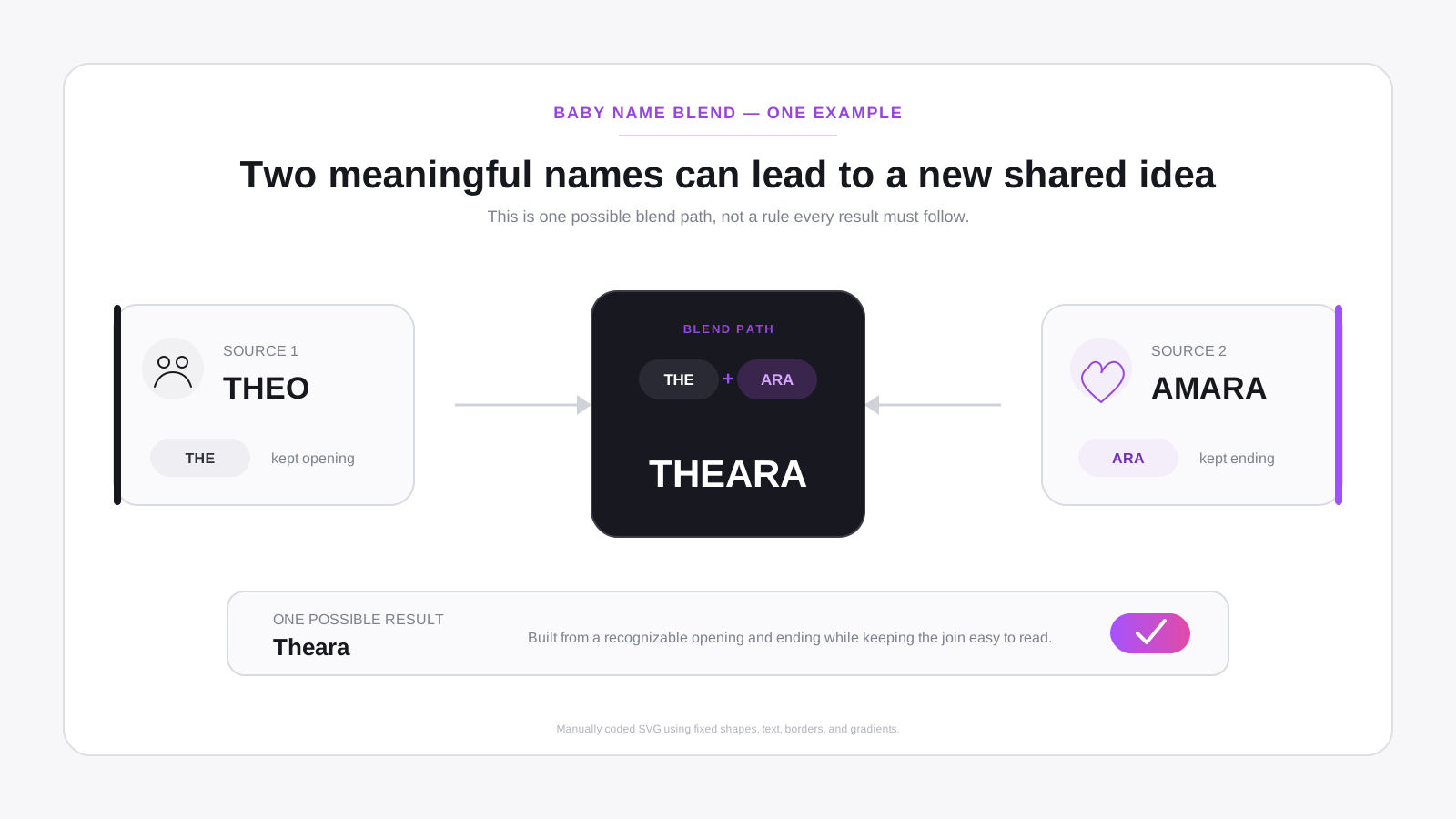
The generator does more than attach two random pieces of text. It creates several candidate blends, checks them against your settings, and ranks the strongest options so you can compare a manageable shortlist.
The generator checks several split points, including natural changes between vowel and consonant patterns, instead of cutting every name at the same position.
Openings, endings, balanced halves, compact fragments, and shared-letter bridges are tested with Parent 1 and Parent 2 taking turns as the starting name.
Candidates that are too short, too long, missing a usable vowel pattern, or outside your active filters are removed before the remaining ideas are scored.
The strongest remaining names are ordered by readability, sound transition, selected style, length, blend balance, and the other preferences you chose.
You can fine-tune the shortlist with the controls already built into this page: gender preference, name length, style, starting letter, blend balance, syllable range, and result count. These settings affect which candidates remain and how they are ranked.
Every displayed result can be copied or marked as a favorite. Favorites are stored locally in the same browser when local storage is available, so you can keep a smaller set of ideas while comparing pronunciation, meaning, initials, and surname flow.
From two names to a useful shortlist
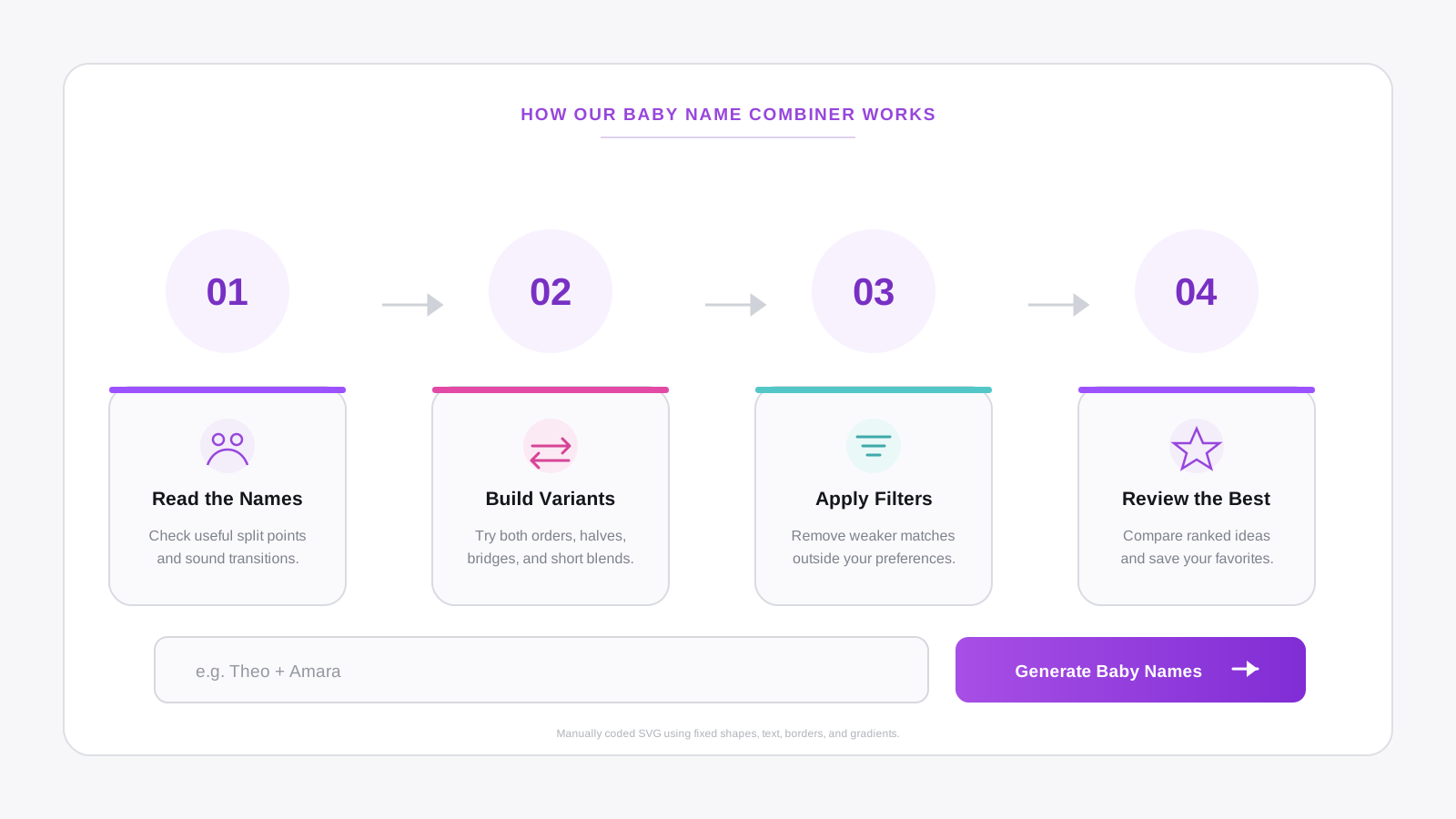
You do not need to configure every option before you begin. Start with the two names, generate a broad set of ideas, and use the extra controls only when you want to narrow the results.
Type the first parent or family name exactly as you normally spell it. The generator uses those letters and sound patterns as one side of the blend.
Enter the second parent, grandparent, surname, or other meaningful family name you want represented in the shortlist.
Set gender preference, name length, and style. Open Advanced Options when you want to control starting letter, syllable range, blend balance, or result count.
Run the combiner and let it test multiple split points, source-name orders, shared-letter joins, and compact blends before ranking the strongest candidates.
Review the results instead of choosing the first one automatically. Copy useful names and star the candidates you want to keep in the browser for later comparison.
The current generator does not require an account or payment to create name ideas. Nothing needs to be downloaded just to use the tool; copied names and browser-stored favorites are available directly on the page.
A different kind of starting point
A traditional baby-name directory is useful when you want established names, documented origins, or meanings. This tool solves a different problem: it starts with names that already matter to your family and creates combinations from them. Neither approach replaces the other.
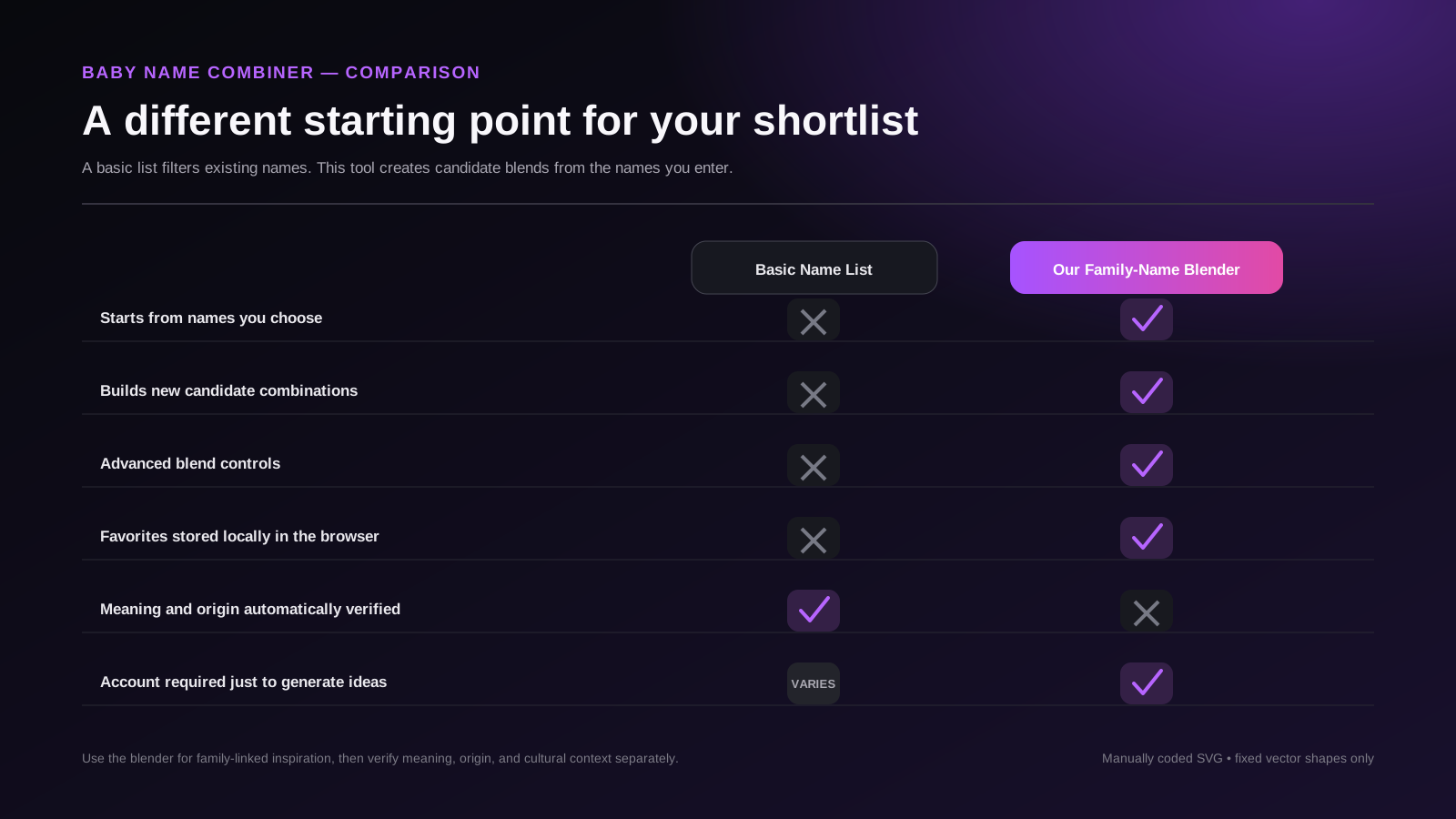
| Feature | Basic baby-name list | Our family-name blender |
|---|---|---|
| Starting point | A catalog of existing names | Two source names you choose |
| How ideas are produced | Searches or filters a stored list | Builds new candidate blends from your inputs |
| Blend controls | Not usually part of a standard name list | Length, style, starting letter, syllables, and source balance |
| Gender preference | Depends on the directory | Any, girl, boy, or unisex preference |
| Favorites | Depends on the service | Saved locally in your browser |
| Meaning and origin | May include researched name records | Never invents a meaning; generated blends should be researched separately |
| Account requirement | Varies by service | No account required for the current generator |
Use the combiner for creative family-linked possibilities, then use reliable naming, language, and cultural sources when you need to verify a finalist's meaning, history, or suitability.
From generated idea to real shortlist
The useful difference in a parent-name blend is not that every generated result will be better than an established name. It is that the search begins with names that already matter to your family, giving you a more personal set of sounds and letter patterns to explore.
That personal connection is only the beginning. A strong final choice should still work as a name in everyday life, which means checking pronunciation, spelling, meaning, nicknames, initials, and how naturally it fits with the family surname.
Shortlist checklist
Behind the Name is a starting point for researching established first names. A newly invented blend may have no entry, so a missing result does not establish its meaning, origin, or suitability. Our guide to preserving both source names can help you evaluate its family connection.
The generator can do the repetitive blending work quickly. These checks help you decide which suggestions are actually worth keeping.
A name can look balanced on screen but still feel awkward when spoken. Read the full name naturally several times and notice where the rhythm feels smooth or forced.
Generated blends are new combinations, so do not assume they already have an established meaning. Check language, cultural context, and existing usage before making a final choice.
Imagine how family, classmates, and friends might shorten the name. Keep the result only if the likely short forms still feel comfortable and clear.
Say the first name and surname together at normal speed. Listen for repeated sounds, awkward pauses, or initials that create an unintended word.
Do not keep dozens of nearly identical blends. Save a few strong options, compare them side by side, and remove anything you would not realistically use.
The opening of one parent name with the ending of the other can sound completely different when reversed. Generate both orders before you settle on a favorite.
Small spelling changes can improve readability, but avoid adding letters just to make a name look unusual. The clearest version is usually easier to pronounce and remember.
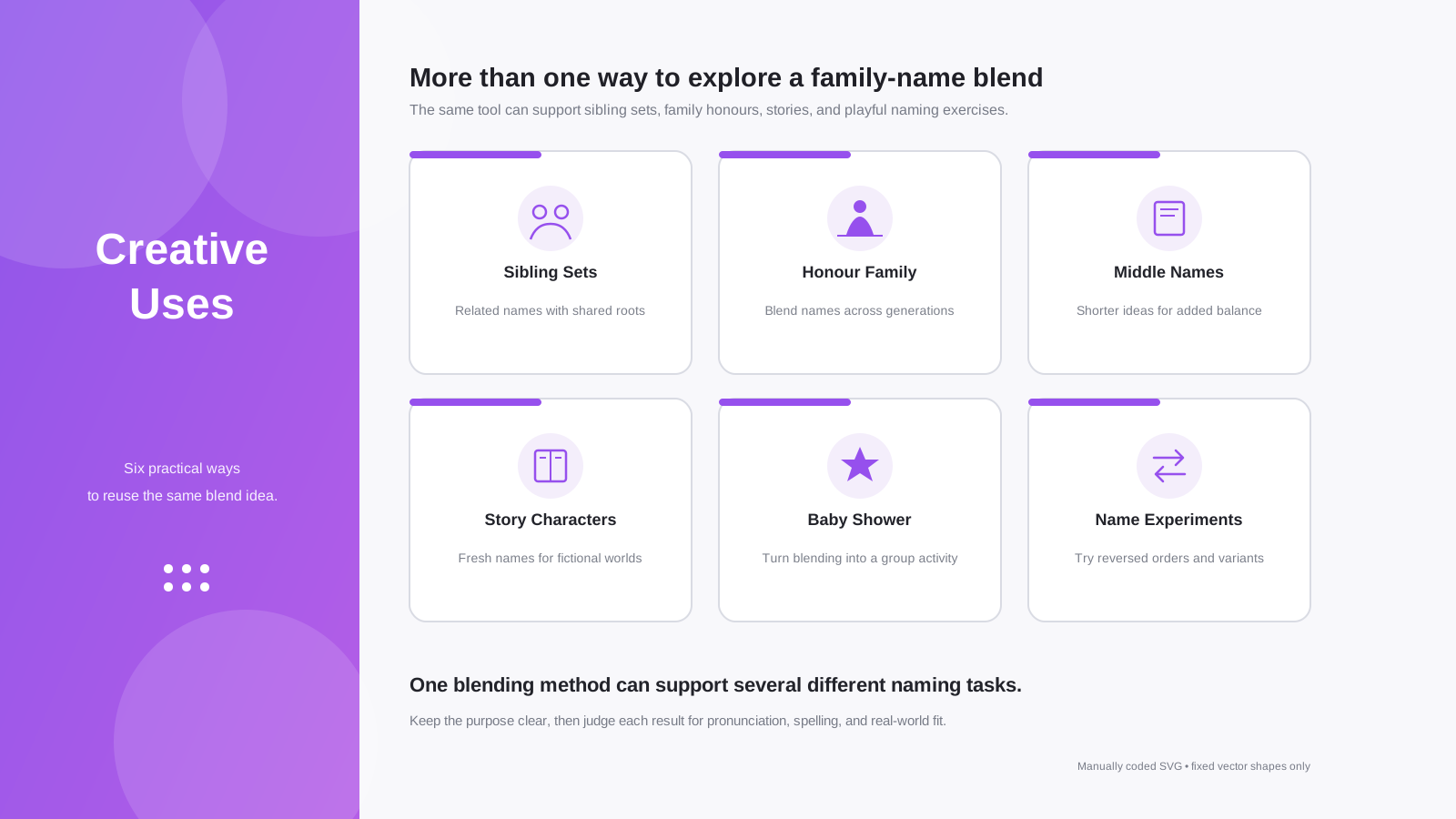
More ways to use the same blending method
Build sibling-name sets — Run the tool more than once with related family names to explore sibling names that share a similar sound, letter pattern, or family connection without being identical.
Honour more than one relative — Blend names from different generations when you want a starting point that reflects more than one side of the family instead of choosing a single honour name.
Explore middle-name ideas — Shorter blends can work as inspiration for a middle name, especially when the full first-name candidates feel too unusual for everyday use.
Create fictional character names — Writers and role-players can use the same blending method to create original-sounding character names from two source names or words they already have in mind.
Turn it into a baby-shower activity — Guests can suggest source names, compare the generated shortlist, and vote on the most interesting result as a lighthearted party game rather than a serious naming decision.
Test alternative spellings and order — Reverse the source names, try a shorter form of one input, or compare close spelling variants to see how small changes affect the final shortlist.
The value is in experimenting with meaningful inputs. Each new pair of source names can reveal a different set of combinations, so use the generator as a creative starting point rather than a final authority.
A name can begin with family history
A baby name becomes part of everyday family life, so the strongest choice is one you can still feel comfortable saying, writing, and explaining years from now.
A family-name blend offers one way to begin that search. Instead of pulling a suggestion from an unrelated list, you can start with two names that already carry personal meaning and explore how their sounds and letters might work together.
The generator creates possibilities. Your research, judgment, and family context decide which possibility is actually worth keeping.
Create Baby Name IdeasQuestions about family-name blending
It creates baby-name ideas from parts of two source names, such as parents, grandparents, surnames, or other family names. The results are suggestions to compare, not a guarantee that every blend will already have an established meaning or history.
The tool tests several split points, both source-name directions, shorter fragments, and shared-letter joins. You can then narrow the shortlist with controls for length, style, gender preference, starting letter, syllable range, and blend balance.
Yes. You can use two meaningful family names, including grandparents’ names or surnames, as long as you treat the generated results as creative starting points and research any finalist before using it.
Use the gender preference as a way to sort the shortlist, then judge each finalist by pronunciation, spelling, meaning, cultural context, initials, nicknames, and how it sounds with the family surname.
Yes. Run the generator more than once and compare names that share a similar sound, source-name connection, or style. The tool can help you explore a coordinated sibling set without forcing the names to match exactly.
You can experiment with the same names here, but the dedicated Couple Name Combiner is better suited to shared nicknames, wedding tags, profile names, and other couple-focused uses.
The generator is designed to build candidates from pieces of both inputs. Some results may preserve a clearer fragment from one source than the other, so use the blend-balance control when you want the contributions to feel more even.
Try a different name length, style, blend balance, syllable range, or starting letter. You can also reverse the two source names or use a familiar shortened version of one input before generating again.
Yes. Choose the Any or Unisex preference and compare a broader shortlist first. You can narrow the results later if your preferences change.
A traditional list is useful for established names, documented origins, and meanings. A family-name blender serves a different purpose: it starts with names that already matter to you and creates new combinations from those inputs.