NAMING GUIDE
A Practical Formula for Wedding Hashtags That Stay Readable
A practical guide to building a wedding hashtag that is easy to read, type, remember, check, and reuse across invitations, signs, captions, and guest posts.
Start with a base guests already recognize
Begin with our Couple Name Combiner if you want a shared name as the starting point. The Knot's wedding hashtag guide provides additional ideas to compare.
The easiest wedding hashtags to remember usually begin with information guests already know: first names, surnames, familiar nicknames, or a short shared phrase. Recognition matters because guests should not need to decode the tag before they can use it.
Write down the versions of each name that people naturally say in real life. A formal full name may look elegant on an invitation, while a shorter nickname may produce a cleaner hashtag. The best starting point is the form that still feels unmistakably connected to the couple.
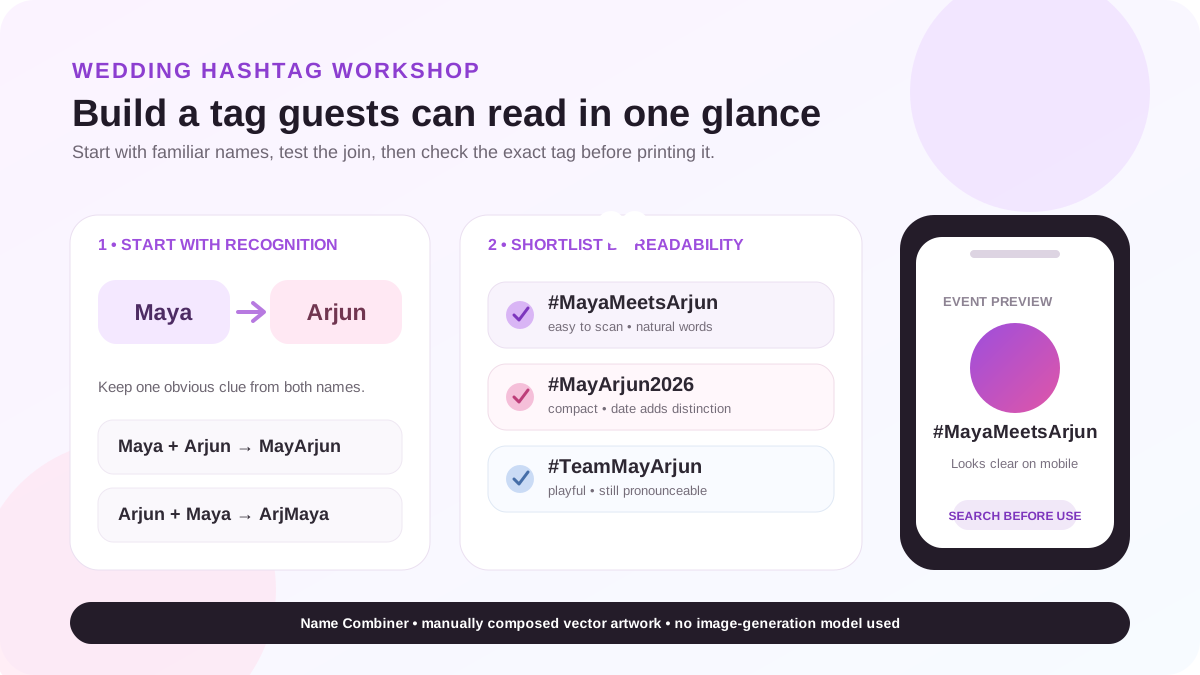
Build a shortlist with a few clear patterns
Shutterfly's wedding hashtag resource and Wedibox's hashtag generator offer alternative starting points. Check every suggestion for spelling, unintended readings, and existing use before adding it to your shortlist.
Instead of trying dozens of random jokes, test a small set of structures and compare them side by side. This makes it easier to see which version is readable before you become attached to the wording.
Useful patterns include a direct name pairing, a shared surname with a short wedding phrase, a compact blend, or a name combination with the year when the date genuinely helps distinguish the tag.
- Name + name: keep both names visible when recognition matters most.
- Name blend + short phrase: useful when the blend already sounds natural.
- Shared surname + wedding word: often clearer for formal signs and keepsakes.
- Names + year: add the year only when it improves uniqueness without making the tag cumbersome.
Use wordplay only when it still reads naturally
A clever hashtag can be memorable, but cleverness should not come at the cost of clarity. Puns work best when the phrase is obvious after one reading and does not depend on an obscure reference that most guests will miss.
If a joke forces unusual spelling, several extra words, or confusing capitalization, compare it with a simpler version. A straightforward tag that guests actually use is more useful than a complicated tag that only looks clever on paper.
Run a readability test before you commit
Hashtags remove spaces, so words that look harmless in a sentence can create awkward letter combinations when they are pushed together. Test the exact final spelling, not just the idea behind it.
Read every candidate on a phone-sized screen and ask another person to say it aloud without explanation. If they pause in the wrong place, misread a name, or cannot remember the tag a minute later, simplify it.
- Use capital letters at word boundaries when you display the tag on signs or invitations.
- Avoid long strings of initials, numbers, or repeated letters unless they have a clear purpose.
- Check whether the joined words accidentally form an unintended phrase.
- Prefer one obvious spelling over a version with several possible spellings.
Search the exact hashtag before printing anything
A good-looking hashtag may already be used by another wedding, event, business, fandom, or public campaign. Search the exact tag on the social platforms your guests are most likely to use before it appears on stationery or signage.
This check does not create legal ownership and it cannot guarantee future availability, but it helps you avoid mixing your wedding posts with an obvious existing stream. If the tag is crowded, adjust the wording rather than adding a long chain of random characters.
Place the hashtag where guests will actually notice it
Even a strong hashtag can disappear if guests only see it once. Introduce it early, then repeat it in a few useful places rather than covering every surface with the same line of text.
The goal is gentle repetition. Guests should encounter the tag when they are most likely to post, not have to search for it later.
- Include it on the wedding website or digital invitation if social sharing is part of the plan.
- Add it to a welcome sign, photo area, menu, or table card where it can be seen naturally.
- Use the same capitalization and spelling everywhere so guests do not create competing versions.
- Ask close friends or the wedding party to use the tag early so guests can see the intended format.
Common wedding hashtag mistakes to avoid
Most hashtag problems come from trying to solve too many goals at once. A tag does not need to explain the whole relationship, include every date, and contain a joke at the same time.
Treat the hashtag like a small label: recognizable, easy to type, and easy to repeat.
- Do not make it so long that guests need to check the spelling every time.
- Do not depend on punctuation, because hashtags generally cannot contain spaces or many special characters.
- Do not assume availability without searching the exact final form.
- Do not choose a version that only makes sense when someone explains the joke.
- Do not change spelling halfway through the event materials.
Final checklist before you use the tag
A wedding hashtag is a small detail, but a quick final check can prevent months of inconsistent spelling. Before you print or publish it, compare the shortlist one last time and choose the version that is easiest for other people to use correctly.
A useful final tag feels connected to the couple without asking guests to work for the meaning. Keep it recognizable, test it in context, search the exact phrase, and then use the same version consistently.
- Both people can recognize themselves in the tag.
- The spelling is obvious after one reading.
- The tag remains readable without spaces.
- The exact phrase has been searched on the platforms that matter to you.
- The same capitalization and wording will be used across invitations, signs, and posts.